
A 30-Minute YouTube Channel Audit Using Only Public Data
A repeatable public-data audit for choosing what to investigate next, with a sample table, fair comparisons and clear limits on what the numbers can prove.
First-hand creator lessons, transparent tool methods and practical explanations grounded in public data and official sources.
A repeatable public-data audit for choosing what to investigate next, with a sample table, fair comparisons and clear limits on what the numbers can prove.
A practical guide to separating observed public values, calculated ratios and private YouTube Studio data before you make a claim about a channel.
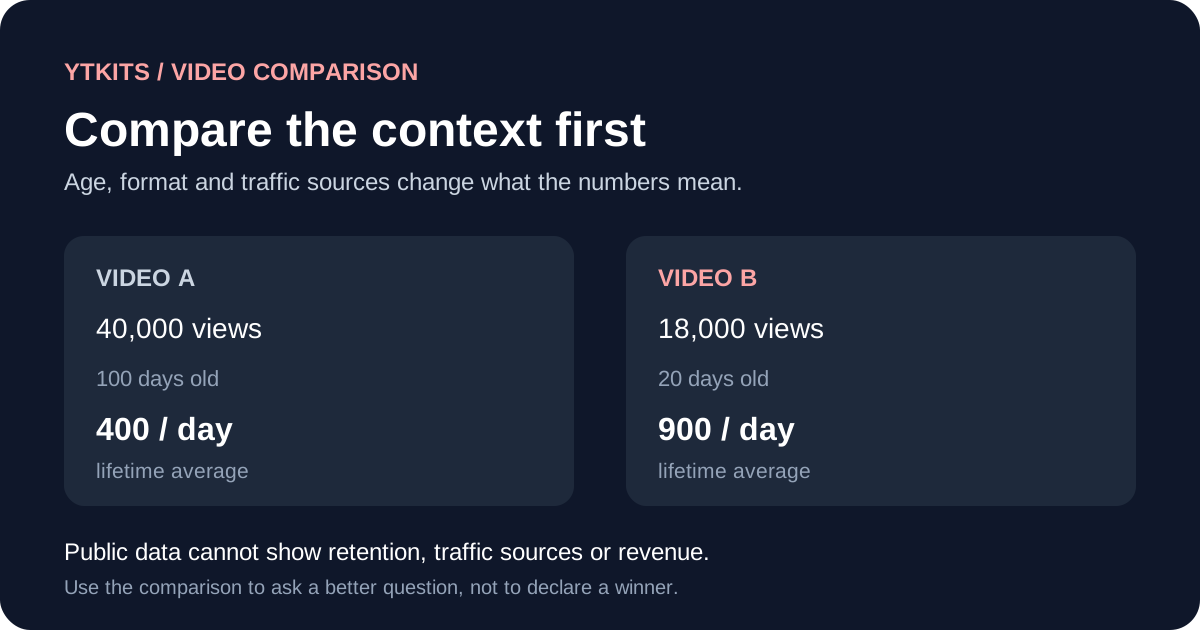
A fair comparison controls for publication age, format and context, then treats views and engagement as separate observations instead of one score.
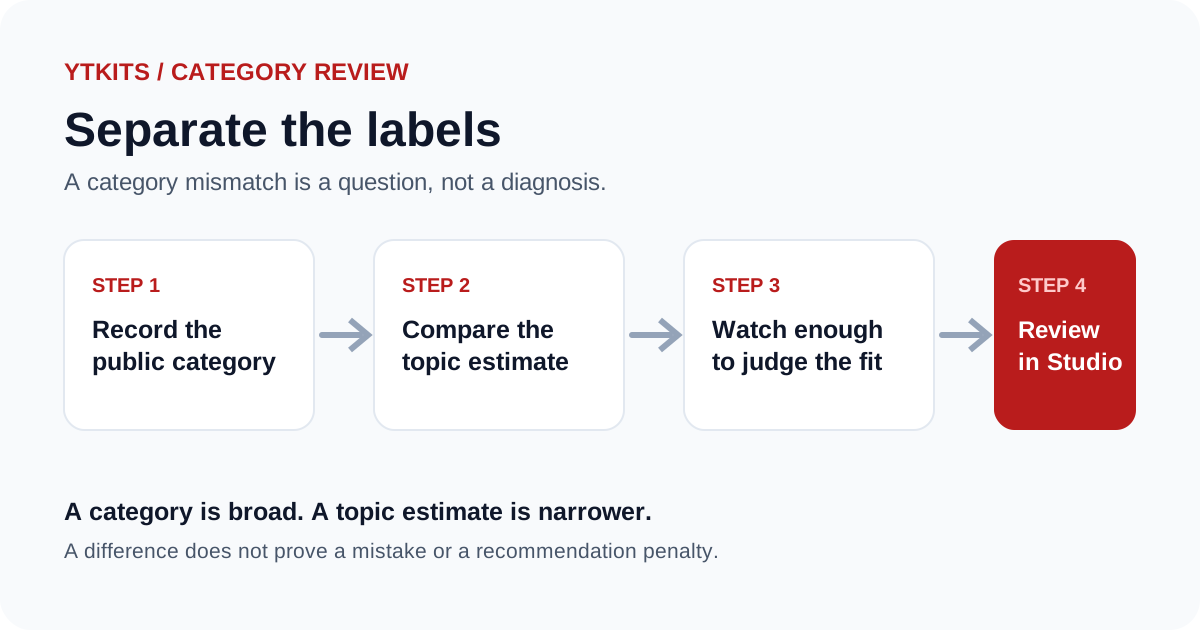
A practical category review that separates YouTube's per-video category from metadata-based topic estimates and avoids unsupported claims about reach.
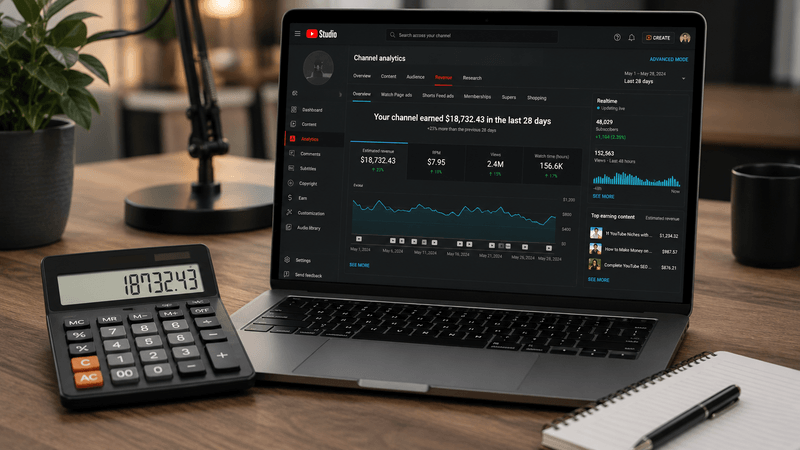
A transparent way to show low, middle and high revenue scenarios without presenting assumptions as measured earnings.
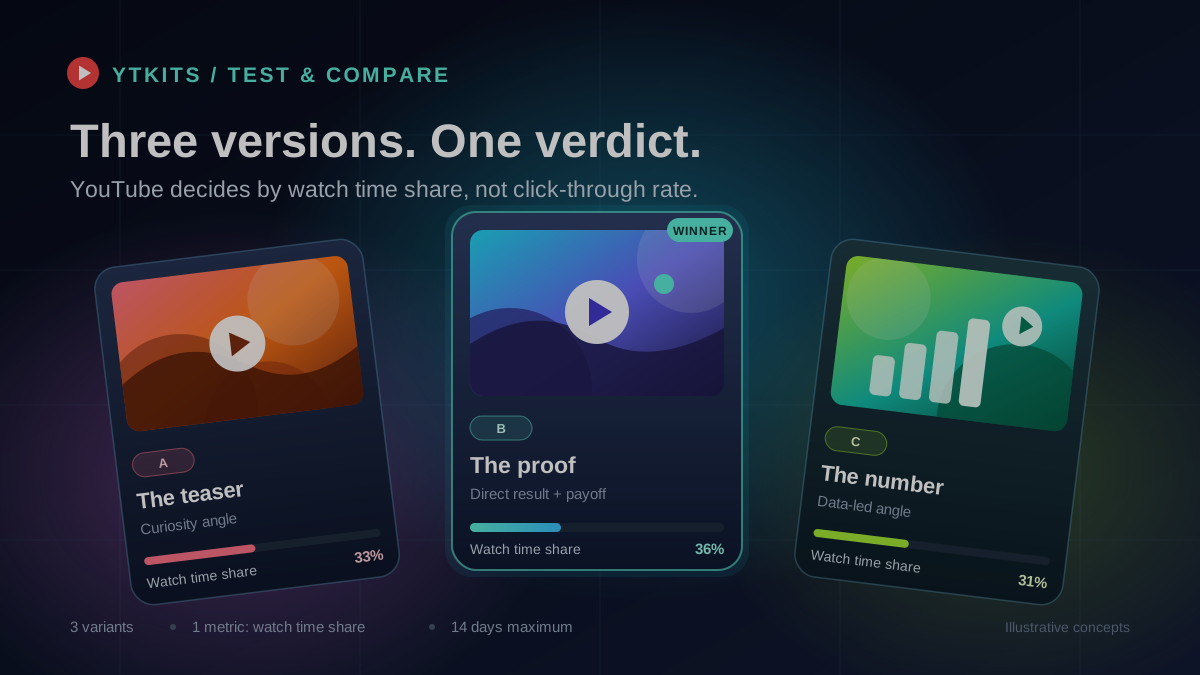
YouTube's Test & compare decides by watch time, not CTR, so many thumbnail tests end inconclusive. Here is the traffic math, the mistakes that stall a test, and a repeatable plan that can produce a winner.
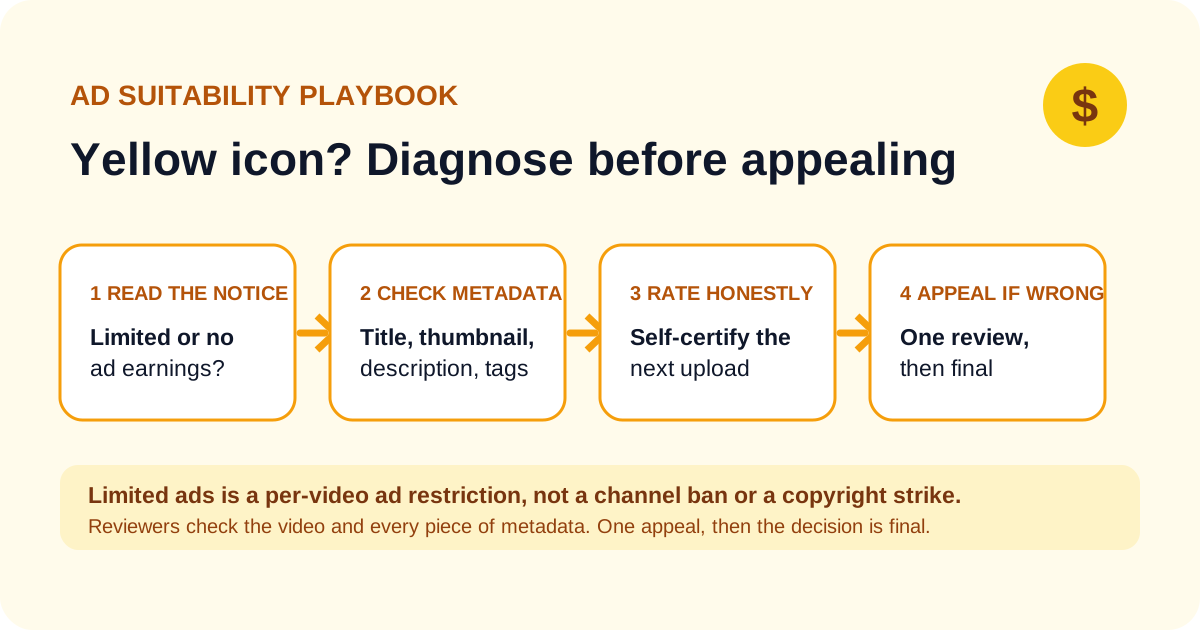
A yellow dollar icon does not mean your channel was demonetized. Here is what Limited ad earnings means, how self-certification works, and the exact diagnose, appeal and prevention workflow I use.

A step-by-step guide to changing your YouTube channel name, @handle and Google Account name, with the 14-day limits and fixes for common errors.
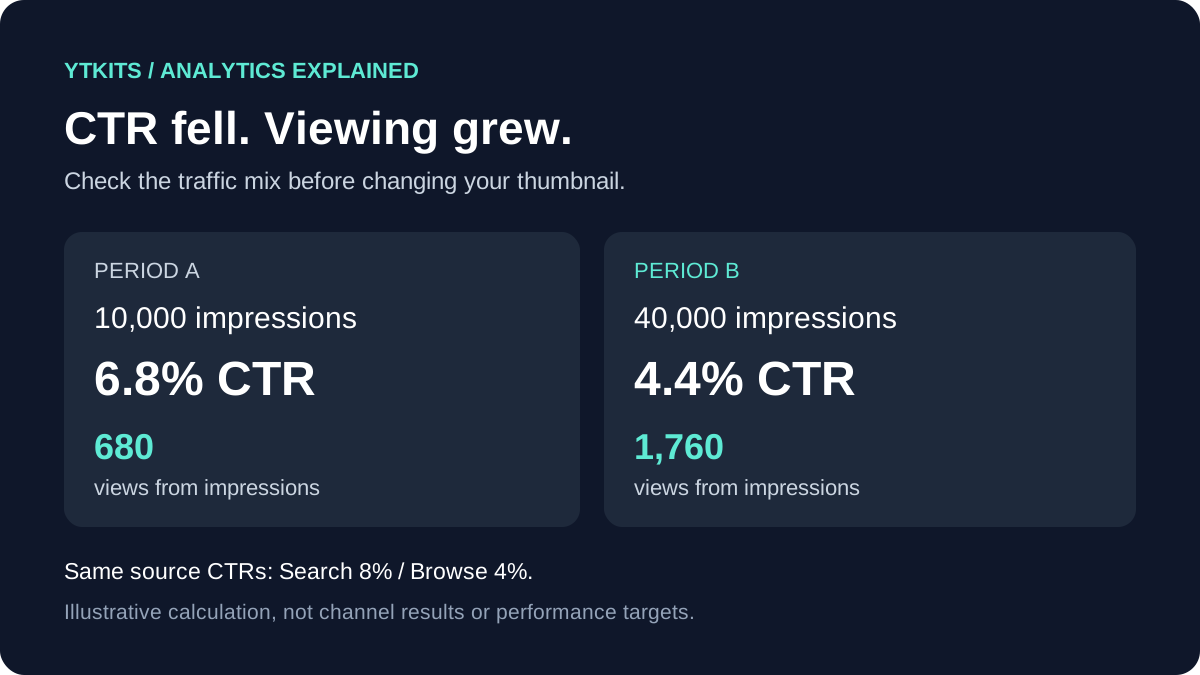
A falling YouTube CTR can hide growing traffic. Use a worked example and a practical Studio checklist to decide whether your thumbnail needs changing.
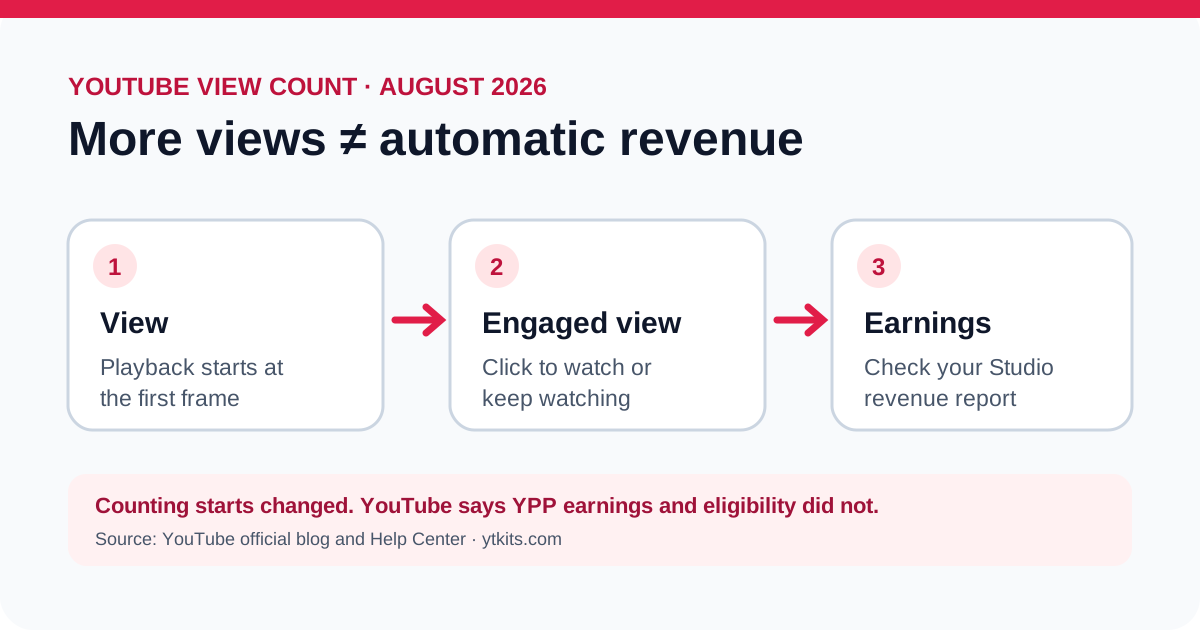
YouTube now counts a view from the first frame across formats. See what changed, why earnings do not automatically rise, and how to check your own Studio data.
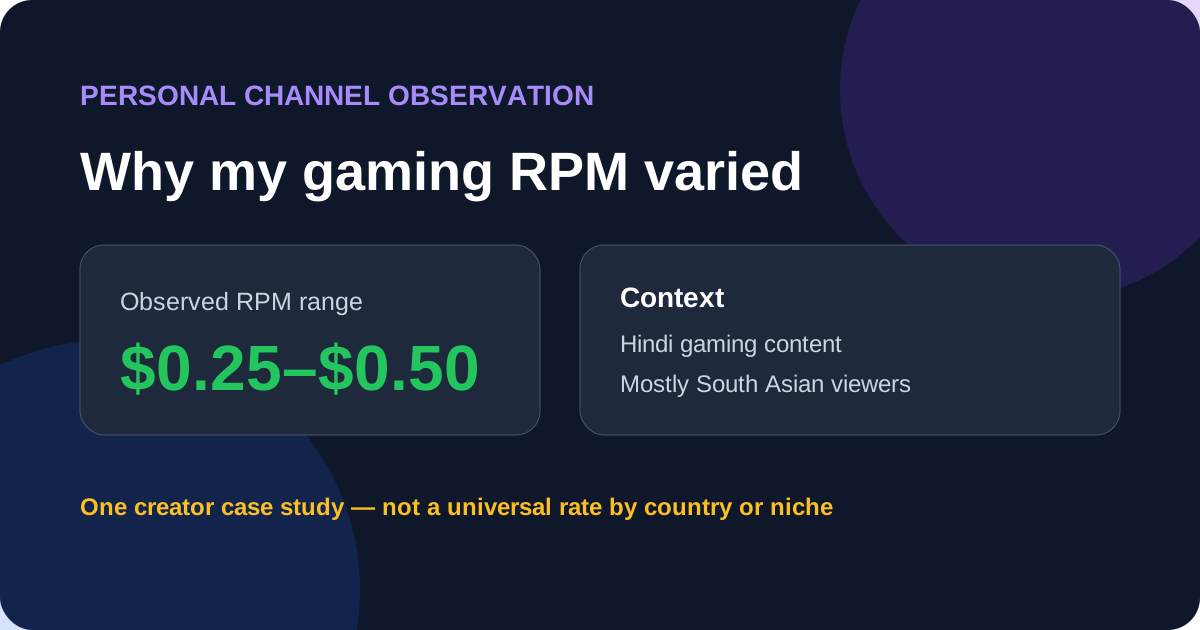
A first-hand look at my South Asian gaming channel's RPM, what YouTube says about viewer geography, and how to compare your own data.
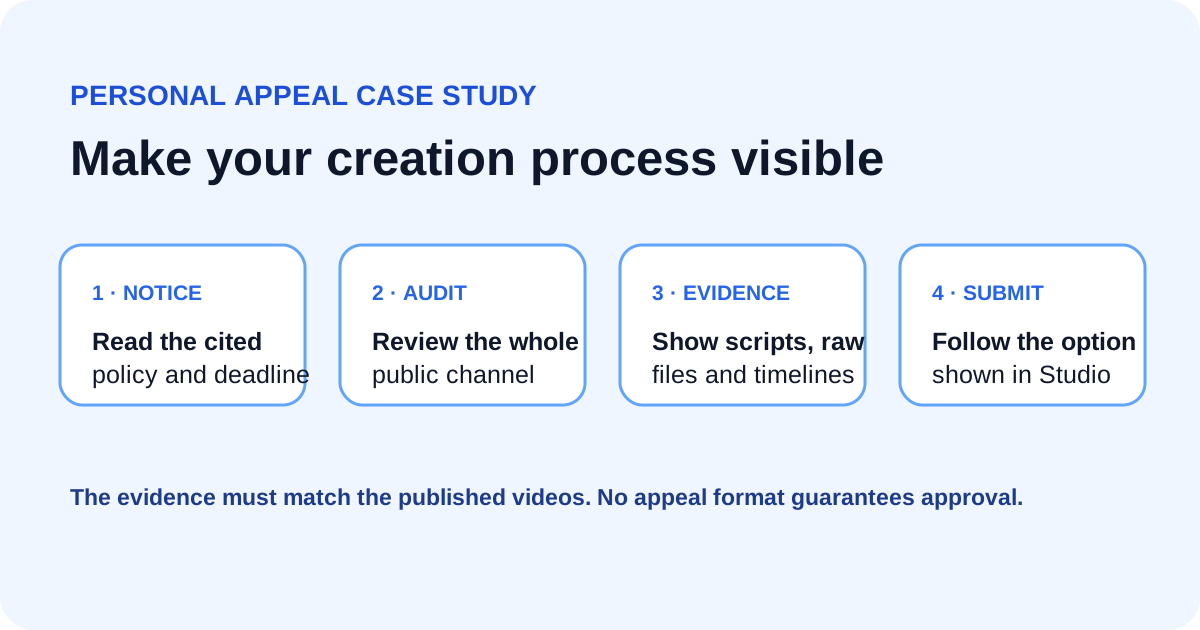
A first-hand account of two YPP reused content rejections, what YouTube's published policy says, and how I showed my creation process in a video appeal.
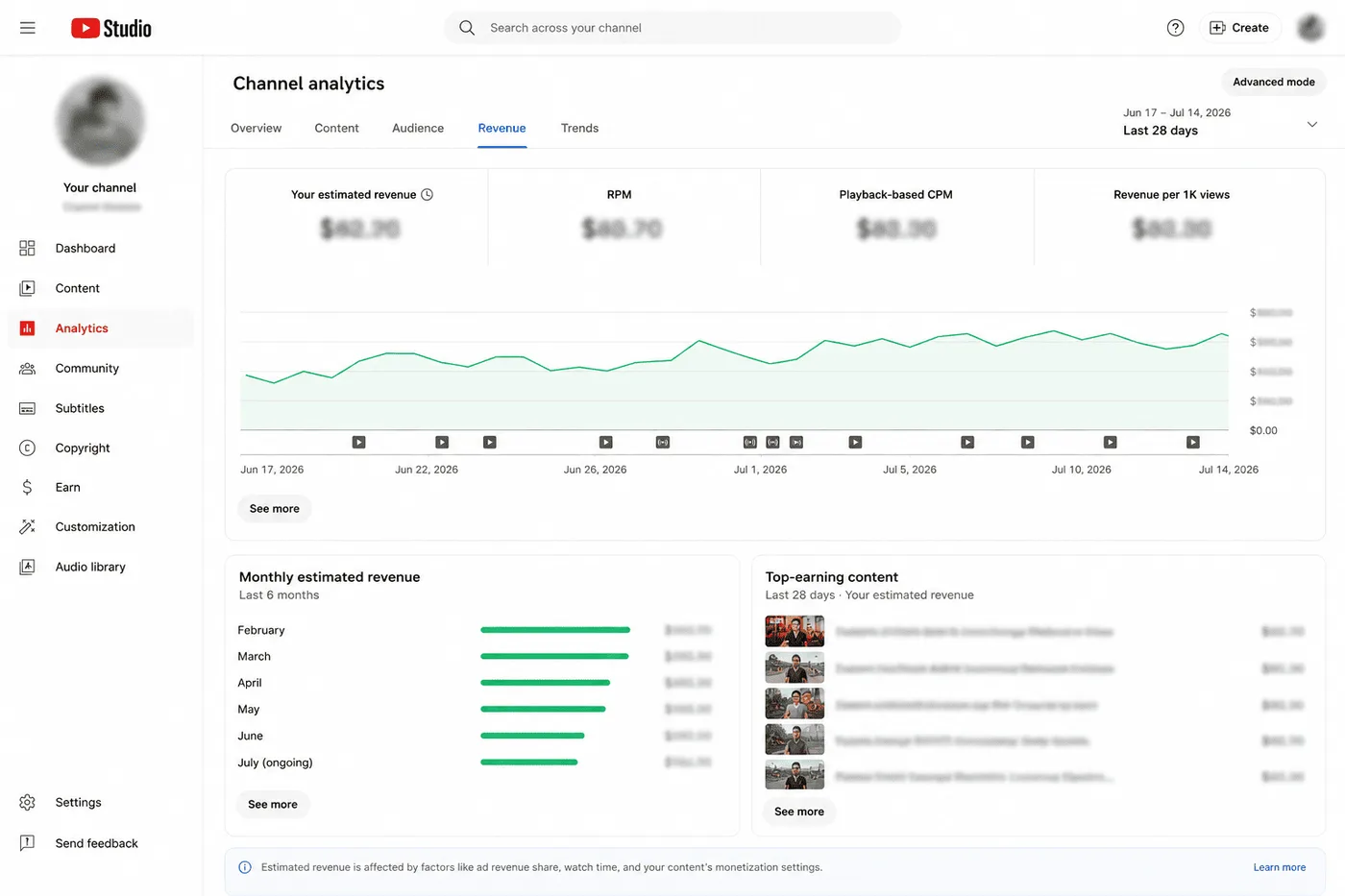
A transparent explanation of the public inputs, adjustable RPM assumptions, formula and limitations behind the YTKits revenue scenario calculator.
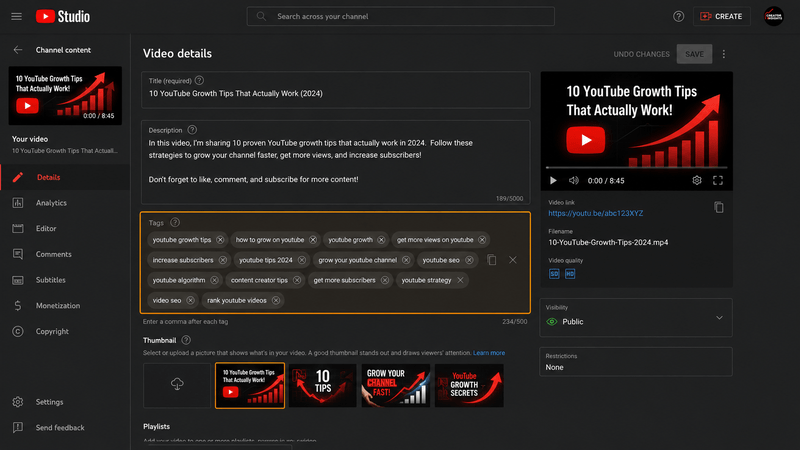
For years I thought YouTube tags were one of the most important parts of SEO. Here's what changed my mind and how I approach tags today.
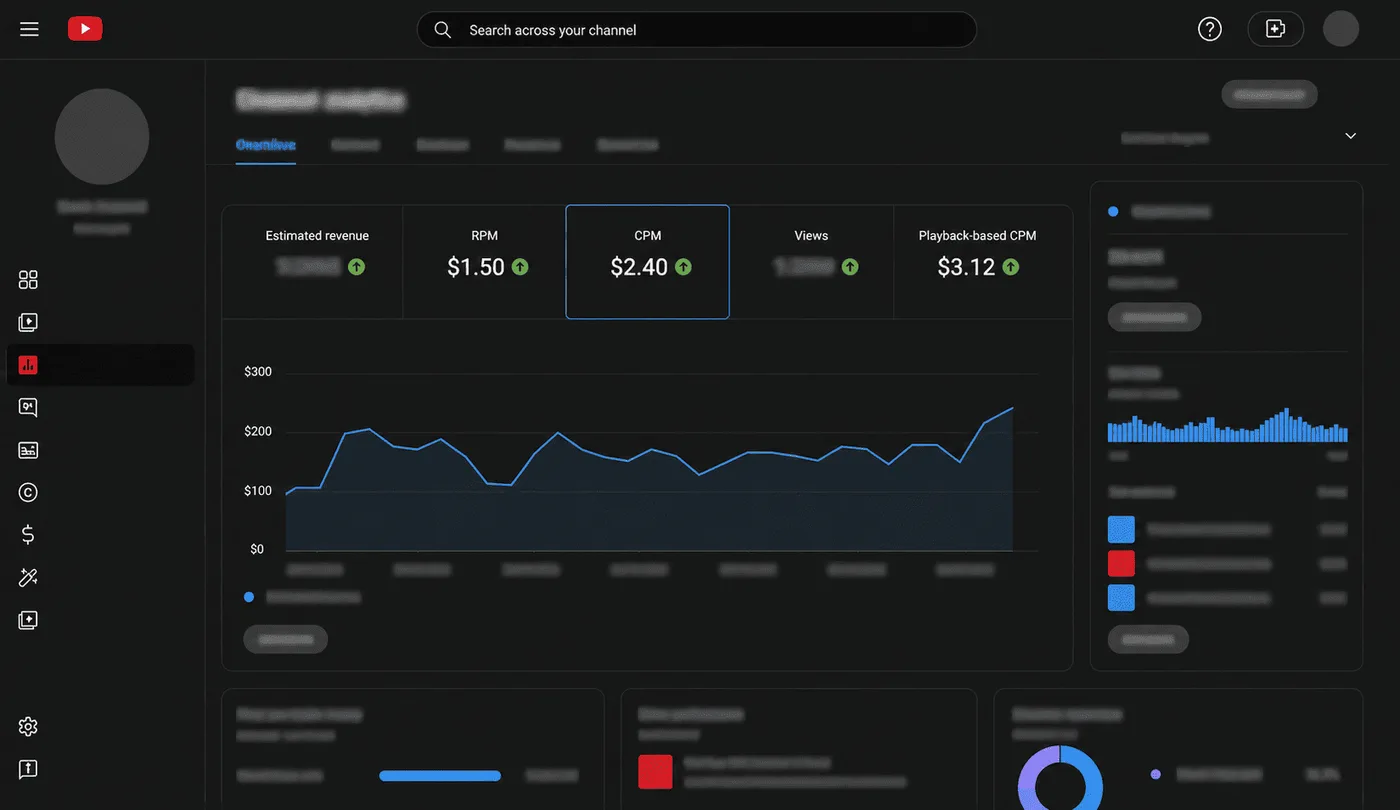
My gaming channel's CPM stayed between $0.50 and $0.70 for months. I spent eight months testing ideas. Here's what helped, what didn't, and what I learned.
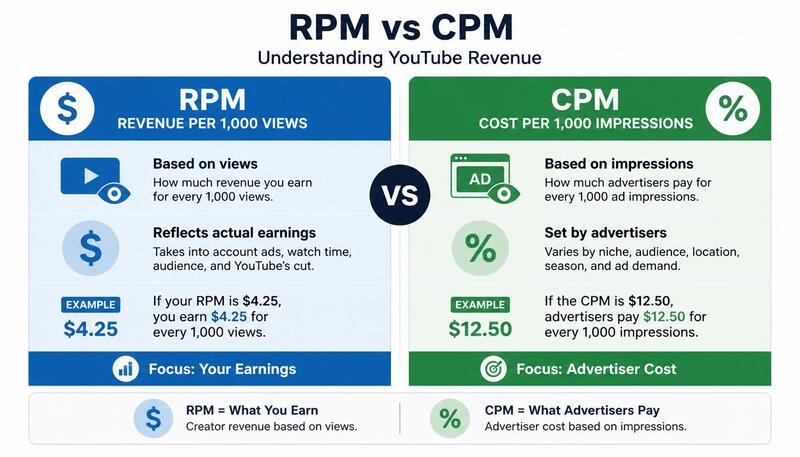
A creator-focused explanation using my Indian gaming channel as context and showing why RPM and CPM measure different things.
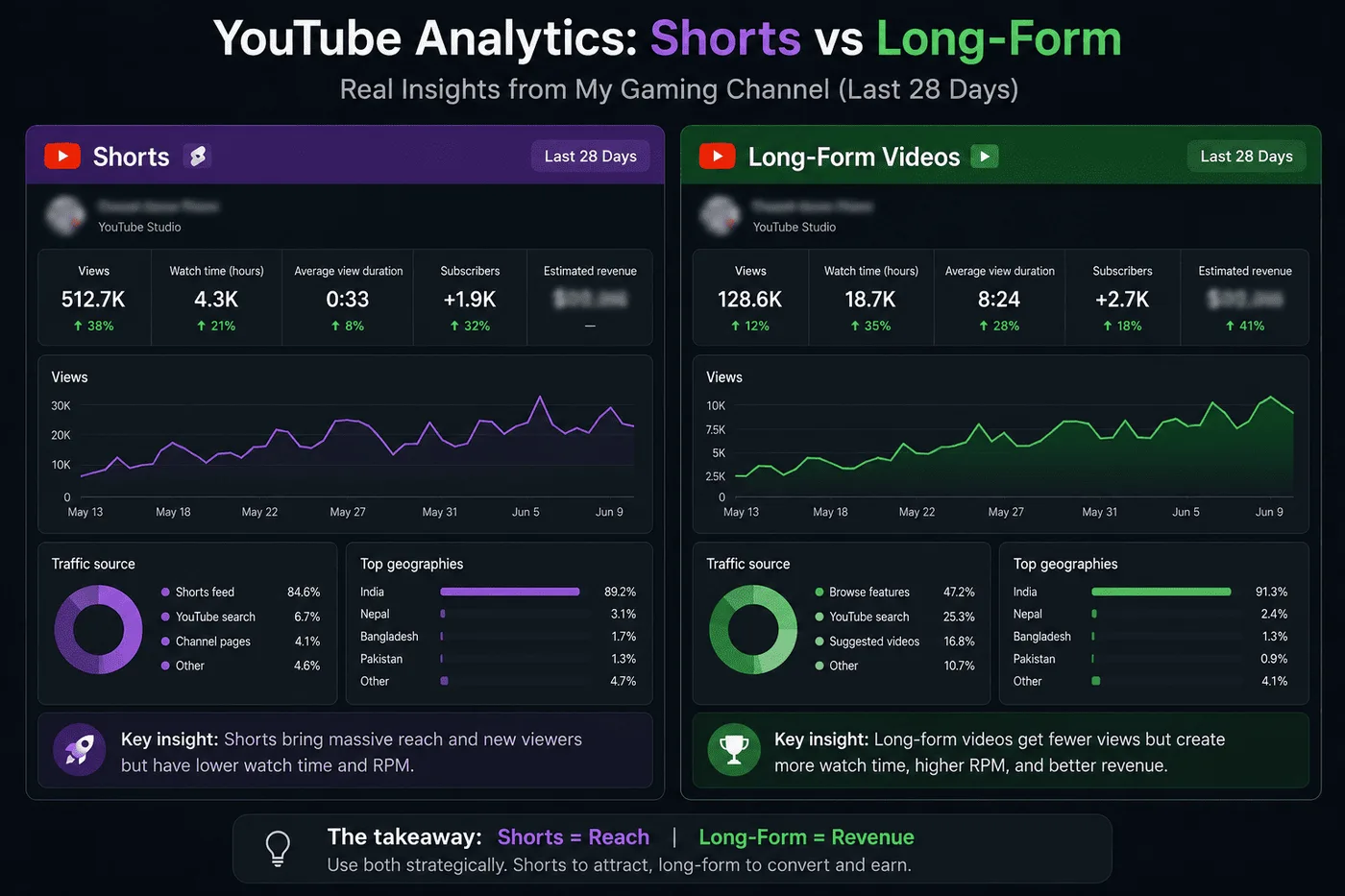
For years I chased Shorts views. Then I switched to long-form videos to increase my CPM and revenue. Here's what actually changed on my gaming channel.
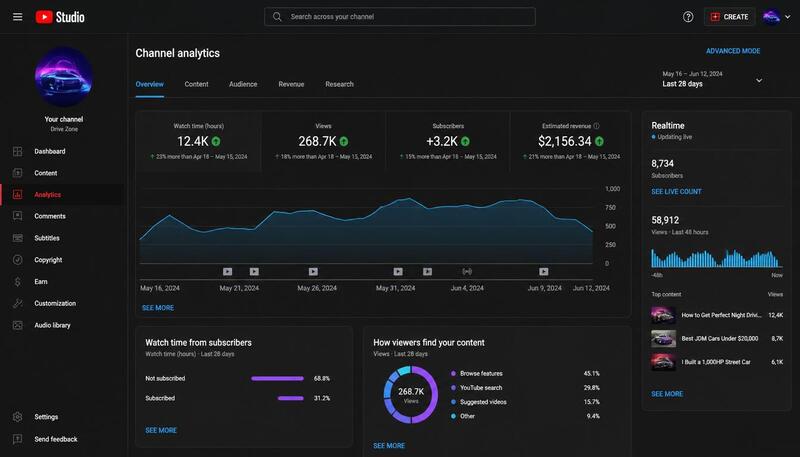
A first-hand account of the publishing, topic and analytics decisions I changed after five years and more than 1,000 uploads on one gaming channel.
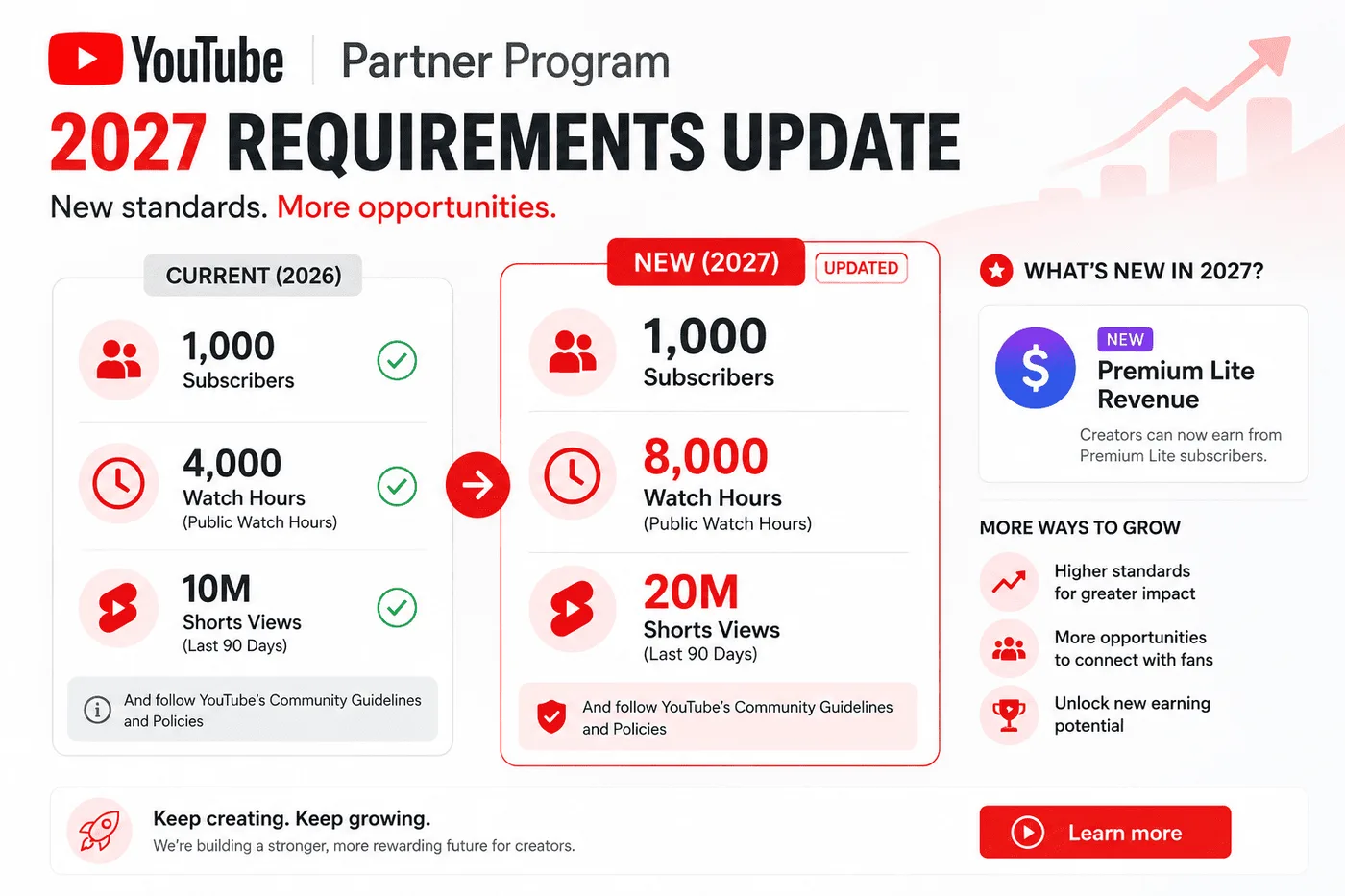
The 1,000 subs and 4,000 watch hours rules are changing soon. Learn current YouTube monetization requirements, Shorts rules and 2027 updates.
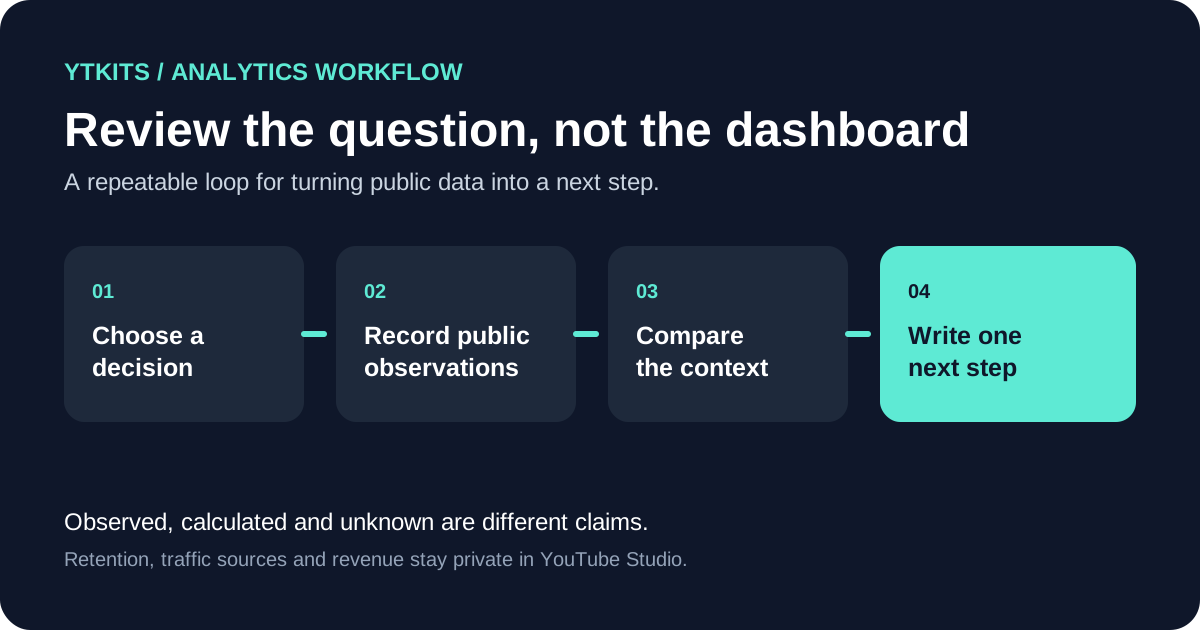
My practical review routine for impressions, CTR, retention, traffic sources and returning viewers, with limits that help avoid false conclusions.
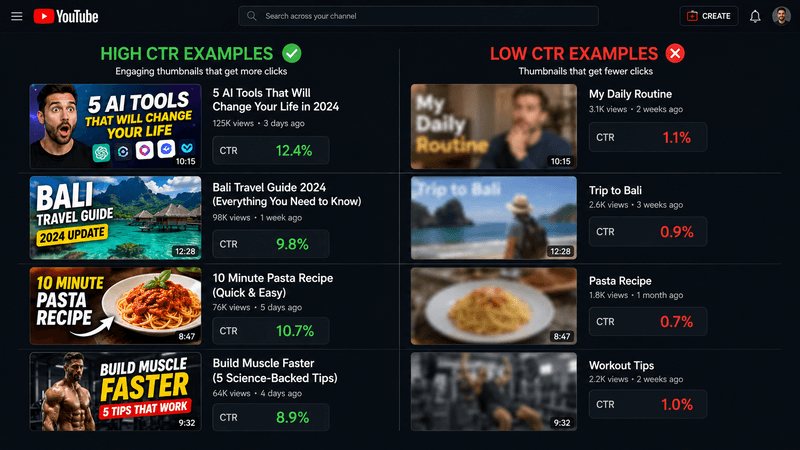
The thumbnail workflow I use on a gaming channel, including what I change, what CTR can and cannot tell me, and how I avoid overreading a test.

A worked example of YouTube revenue scenarios, why category cannot reveal RPM, and how to choose and test the assumptions behind an estimate.
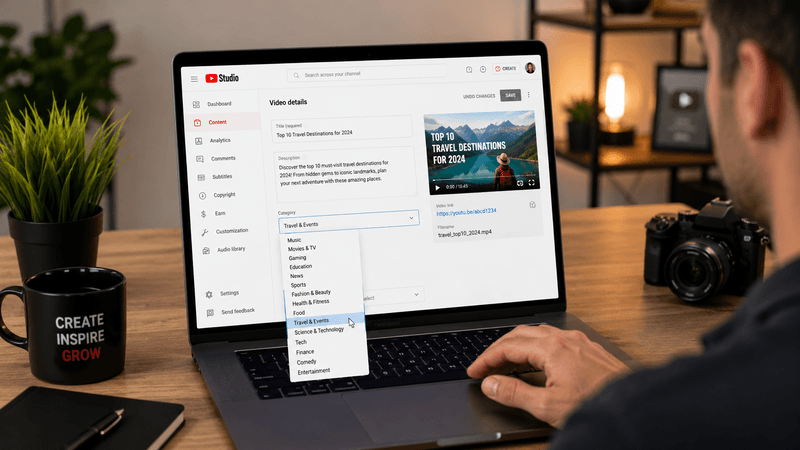
A practical guide to YouTube video categories, why channels have no single API category, and how to read YTKits topic predictions.
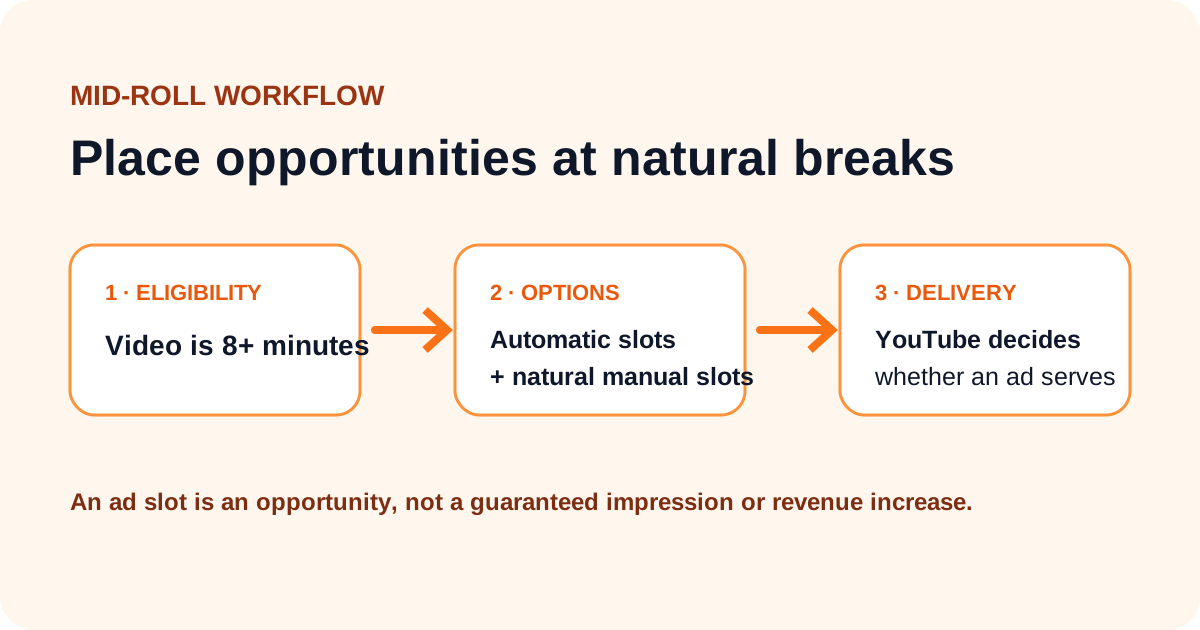
Practical YouTube mid-roll ad placement guide: how to place natural ad breaks on 8-minute videos, protect viewer retention, and measure RPM impact.

A practical niche test based on topic supply, viewer needs and a small publishing experiment instead of choosing from an earnings list.