My gaming channel usually earned between $0.25 and $0.50 RPM while most viewers were in India and nearby South Asian countries. That is a description of my channel during the period I reviewed, not a benchmark every gaming channel should expect.
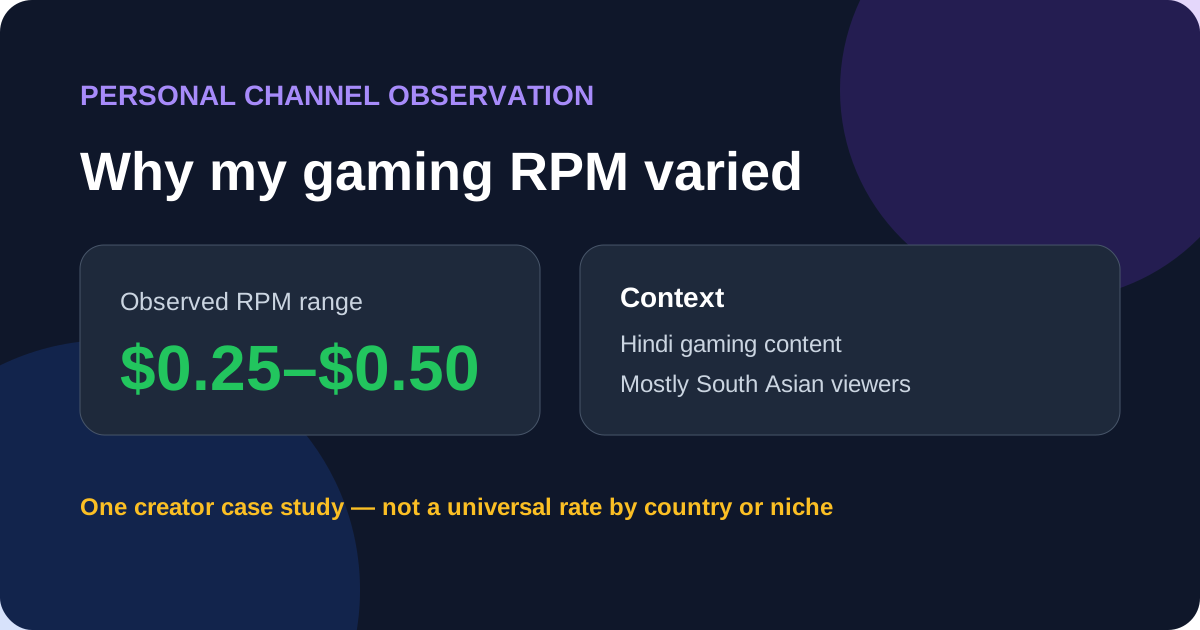
At a $0.35 RPM, 100,000 views would produce about $35 in YouTube revenue. The arithmetic is simple; the reasons behind the rate are not. Topic, season, advertiser demand, the share of monetized views, video format, and revenue from YouTube Premium or memberships can all change RPM.
Evidence note: The $0.25-$0.50 range comes from my own YouTube Studio data. I have not published the channel identity or a downloadable Analytics export because it would expose private channel information. Treat the range as one creator case study, not a market average.
What YouTube confirms about geography
YouTube defines RPM as the creator's revenue per 1,000 views after YouTube's revenue share. Its official revenue guide also lists changes in viewer geography as one reason CPM can change, because advertisers choose which locations they want to reach. Read YouTube's RPM and CPM explanation.
This means two videos with the same view count can earn different amounts. It does not support a fixed country price list. YouTube does not publish universal RPM rates for India, the United States, or any other country, so tables that promise an exact rate by country should be treated as estimates.
What I observed on my channel
Two characteristics explained most of my audience mix:
- Language: My voiceovers were in Hindi.
- Topic: I covered games and trends with strong demand in India and South Asia.
I also tried English titles and subtitles. They made the videos easier to understand for people who already found them, but I did not see a meaningful shift toward viewers in the United States or Europe. This was an observation from my channel, not proof that subtitles never help discovery.
The useful lesson was that language changes alone could not create demand for a regional topic. If I wanted to test a broader audience, I needed to test topics that viewers in those markets already watched, then measure the result in Analytics.
How to inspect your own geography data
YouTube's Analytics guide explains how to use Advanced Mode for detailed reports. The interface can change, but the practical workflow is:
- Open YouTube Studio > Analytics > Advanced Mode.
- Select a period long enough to reduce day-to-day noise, such as 90 days.
- Break the report down by Geography.
- Compare views, estimated revenue, RPM, and playback-based CPM where those metrics are available.
- Repeat the comparison for similar videos and formats. Do not compare a Short with a 20-minute tutorial and assume geography caused the difference.
YouTube may limit geography data when there is not enough traffic, so small channels will not always see every country or metric.
A safer way to test a broader audience
Do not rebuild a channel around a third party RPM chart. Run a small content test:
- Choose three to five topics with clear relevance outside your current region.
- Keep the language and production style consistent during the test.
- Publish enough videos to avoid judging the idea from one upload.
- Compare geography, retention, traffic sources, and revenue with a similar earlier group of videos.
- Continue only if the new audience watches and returns. A higher CPM does not help if the videos lose most of their views.
For my channel, universal game titles and software tutorials were more sensible experiments than trying to make a regional game appear global through metadata alone.
Revenue beyond geography
RPM is a useful diagnostic metric, but it does not include every way a channel can earn. YouTube's official definition excludes income such as outside sponsorships, merchandise, and most indirect revenue. A channel with a lower ad RPM may still work as a business if it has strong repeat viewership, sponsorship demand, memberships, or relevant affiliate products.
Use the YTKits Revenue Estimator for scenario planning, but treat its output as an estimate. Your own YouTube Studio history is the better source for decisions about your channel.
Frequently asked questions
Does uploading through a US VPN increase RPM?
There is no reliable evidence that changing the upload location raises RPM. YouTube says CPM can change with viewer geography, so inspect where viewers are watching rather than where you uploaded.
Do English subtitles bring US viewers?
They can make a video accessible to more people, but they do not guarantee discovery or demand. In my test, subtitles did not materially change the audience geography.
Is there a standard RPM for each country?
No official universal table exists. RPM varies by channel, audience, revenue mix, advertiser demand, season, and video format. Use country tables only as rough third party estimates and label them accordingly.